
How Cold Chain Logistics Ensures Freshness for Global Food Supply
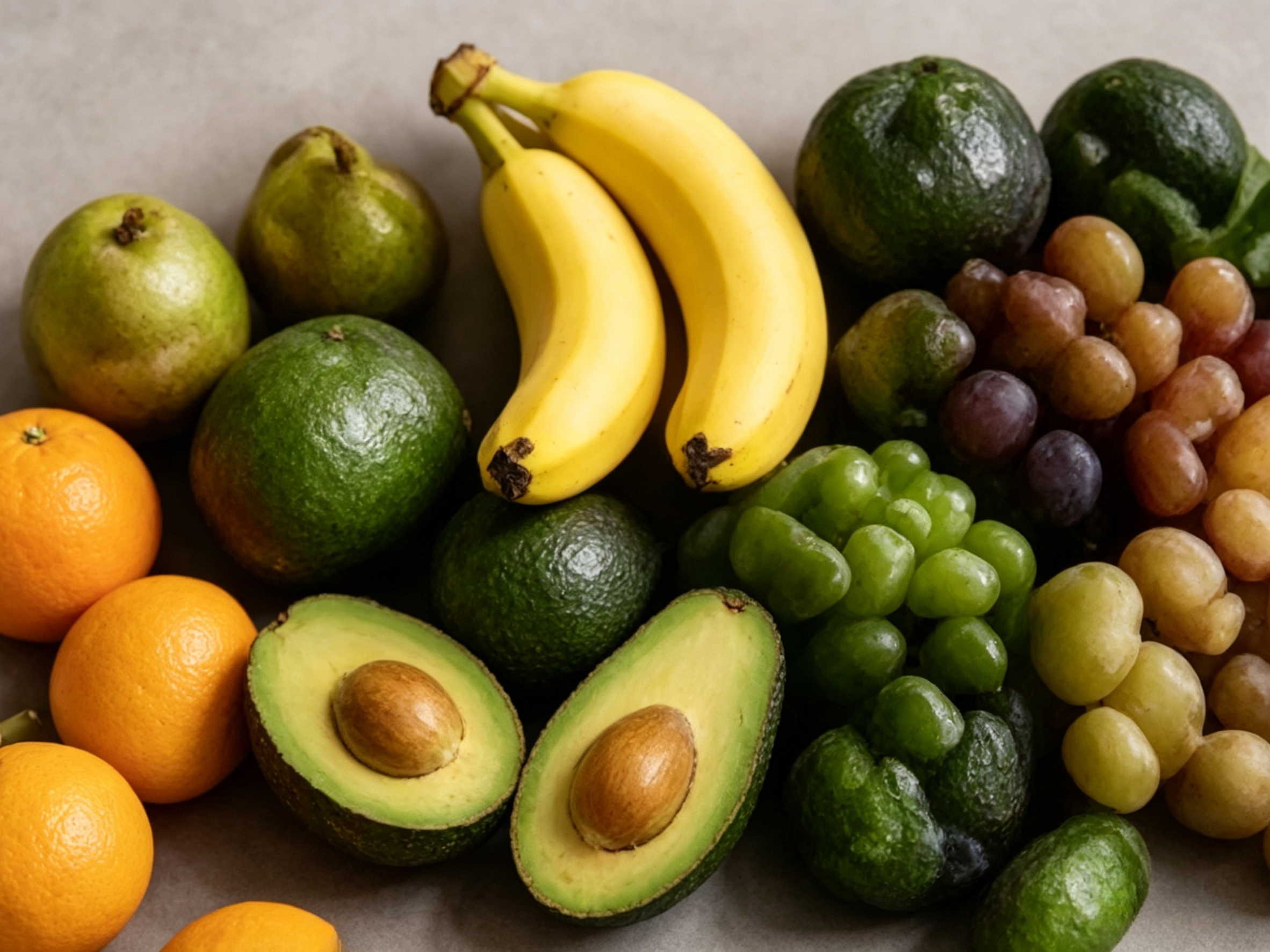
A strawberry harvested in Spain may be eaten in Germany. Salmon processed in Norway may reach a restaurant in Asia. Grapes, avocados, dairy products and frozen seafood routinely travel farther than their natural shelf life would once have allowed.
Refrigeration makes these journeys possible, but refrigeration alone is not the whole answer. Food remains fresh only when the right conditions are maintained through harvesting, pre-cooling, packing, storage, loading, transport, customs clearance, distribution and retail. A failure at any handover can consume shelf life that cannot be recovered later.
That is the real function of cold chain logistics: not simply to make food cold, but to manage the conditions that determine how quickly its safety and quality decline.
What is cold chain logistics in the food industry?
Cold chain logistics is the coordinated storage, handling and transport of temperature-sensitive food under defined environmental conditions. It starts close to the point of harvest or production and continues until the product reaches the buyer, retailer or consumer.
A working food cold chain normally combines:
rapid removal of field or processing heat;
product-specific temperature and humidity limits;
suitable packaging and pallet configuration;
cold rooms, refrigerated vehicles and reefer containers;
controlled loading, unloading and temporary staging;
temperature measurement and shipment records;
clear action when a deviation occurs.
The word “cold” can be misleading. There is no single ideal cold-chain temperature. Frozen foods require conditions that keep the product frozen. Chilled meat and seafood have different limits. Many fruits and vegetables need cooling but can suffer chilling injury if stored too cold. Bananas, for example, cannot be managed like frozen fish.
The objective is therefore a suitable and stable product environment—not the lowest temperature a refrigeration unit can produce.
Why freshness is a time-and-temperature problem
Freshness is not one measurable property. It includes texture, colour, flavour, aroma, moisture, nutritional quality and remaining shelf life. For some foods, safety hazards must also be controlled.
After harvest or processing, deterioration continues:
fresh produce respires and loses moisture;
enzymes continue to change colour, texture and flavour;
microorganisms can grow when conditions permit;
fats may oxidise;
frozen foods can suffer recrystallisation and texture damage if temperatures fluctuate.
Cooling slows many of these processes, but it does not reverse them. Ten hours of poor temperature control cannot be “repaired” by setting the reefer colder for the rest of the journey. This is why cold-chain decisions must consider both how warm the product became and how long it remained there.
Temperature also interacts with humidity, airflow, packaging, product maturity and initial microbial load. A temperature record is essential evidence, but it must be interpreted in the context of the product and shipment.
The seven links that protect food from origin to market
1. Harvest and initial handling
Freshness begins before the truck arrives. Harvest time, exposure to sunlight, handling damage and the delay before cooling all influence the condition in which food enters the chain.
Bruised produce, fish left warm after harvest or dairy products delayed before chilling already carry quality risk. Cold logistics cannot restore quality that was lost before cooling began.
2. Pre-cooling
Pre-cooling removes field heat or processing heat before storage and long-distance transport. Depending on the commodity, operators may use forced-air cooling, hydro-cooling, vacuum cooling, ice or refrigerated seawater.
This step matters because a refrigerated vehicle is mainly designed to maintain product temperature. It may not have the capacity or airflow needed to cool a warm load quickly and evenly. Loading warm products into a pre-cooled trailer is not the same as pre-cooling the products themselves.
3. Packaging and palletisation
Packaging protects food from impact, contamination and moisture loss, but it must also support thermal performance. Vent holes, carton strength, liners, insulation and pallet arrangement affect how air moves around the load.
Overpacked cartons or blocked airflow channels can create warm zones even when the reefer set point looks correct. Too much open space may create instability and physical damage. Packaging therefore has to match the commodity, transport mode and expected journey.
4. Cold storage
Cold rooms provide a controlled buffer between production and transport. Their job is not only to reach a set point but to maintain uniform conditions while doors open, stock moves and defrost cycles occur.
Air temperature near the evaporator does not necessarily represent the product temperature at the centre of a pallet. Warehouse mapping, sensor placement, stock rotation and door discipline help identify and reduce these differences.
5. Refrigerated transport
Reefer trucks, containers and airfreight packaging maintain the required environment during movement. Good transport preparation includes equipment inspection, pre-trip checks, correct set-point and ventilation configuration, suitable loading patterns and verified power continuity.
Transport risk is not limited to equipment failure. Delays, congestion, incorrect settings, fuel shortages, port dwell time and loss of electrical connection can all affect a shipment.
6. Loading, unloading and handovers
The weakest moments are often the ordinary ones: pallets waiting on a warm dock, doors left open, product moved between facilities, inspections at customs or a reefer disconnected during transfer.
These short events may be invisible in the carrier’s equipment record. A logger travelling with the cargo provides a separate view of conditions experienced closer to the product.
7. Receiving and release
Cold-chain management ends with a decision, not with delivery. The receiver needs to check shipment condition, temperature history, packaging integrity and any alarms against agreed acceptance criteria.
A temperature excursion does not automatically prove that food is unsafe or unusable. Equally, a normal temperature at the moment of delivery does not prove that the entire journey was controlled. The full time-temperature history supports a more defensible decision.
Different foods need different cold-chain strategies
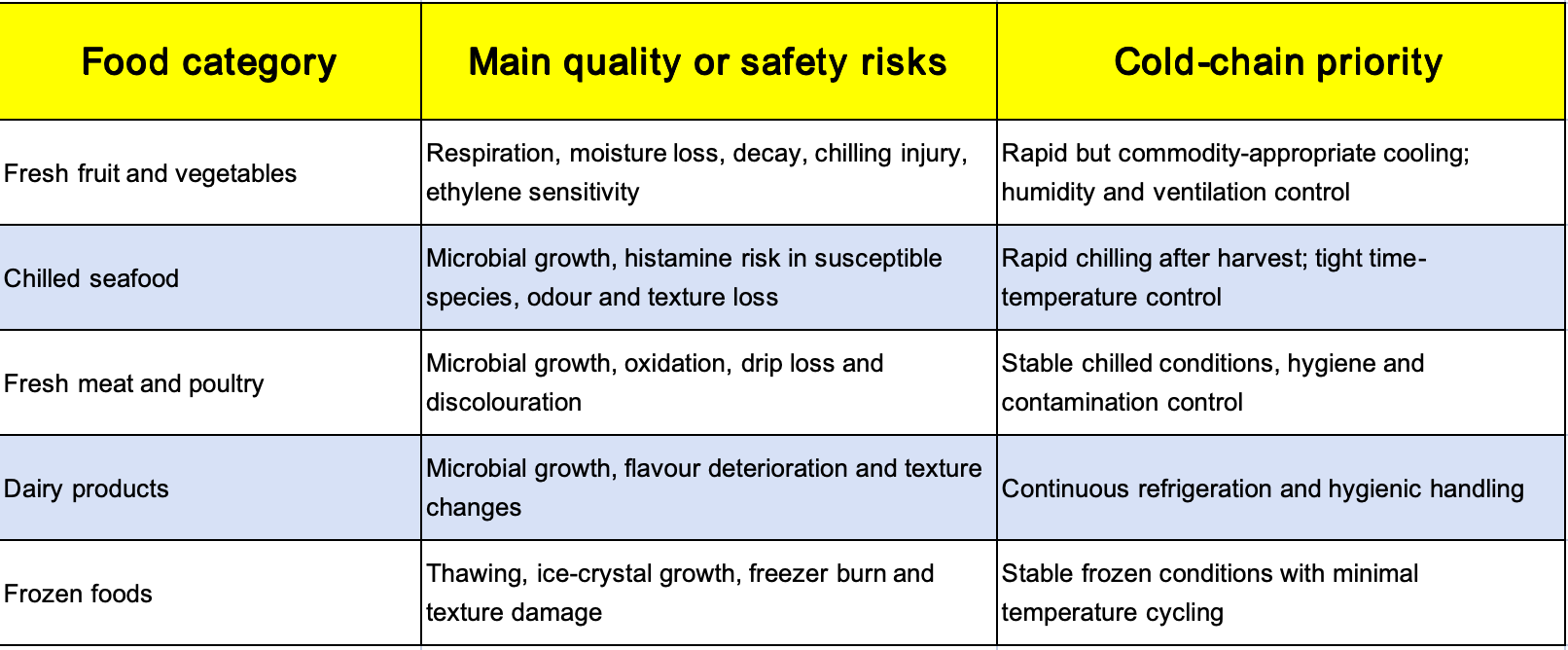
These are operating principles, not universal acceptance limits. Exact limits must come from product specifications, food-safety plans, customer agreements and applicable regulations.
Where freshness is most often lost
Cold-chain failures are frequently process failures rather than dramatic refrigeration breakdowns.
Common causes include:
product loaded before it reaches the required temperature;
the wrong set point, ventilation mode or defrost setting;
blocked airflow caused by poor pallet arrangement;
long staging time at ambient temperature;
repeated door opening during multi-drop delivery;
inadequate insulation or packaging for the route duration;
unplanned port, customs or last-mile delays;
gaps in responsibility between shipper, forwarder, carrier and receiver;
monitoring devices placed where they do not represent cargo conditions;
temperature data collected but never reviewed.
The last failure is easy to underestimate. Recording a problem without a defined response does not protect the shipment. Monitoring becomes valuable only when alarm thresholds, review responsibilities and corrective actions are agreed in advance.
How temperature monitoring supports food quality
Refrigeration equipment controls an environment. A temperature data logger verifies what happened over time.
Depending on the route and business need, monitoring may include:
USB data loggers for a downloadable PDF report at destination;
reusable loggers for repeated warehouse, vehicle or route studies;
Bluetooth loggers for nearby access without opening packaging;
real-time loggers for remote visibility and alerts during high-value or high-risk shipments;
warehouse sensors for continuous monitoring of fixed storage areas.
These devices answer different questions. A USB logger can help verify completed transport. A real-time device may allow intervention while the shipment is still moving. A reusable unit can be more economical for closed-loop operations.
Selection should be based on the decision the data must support—not on connectivity alone.
Air temperature is not always product temperature
A reefer controller usually reports return-air or supply-air temperature. A logger inside a carton records conditions at its own location. A probe in the product measures something different again.
These readings should not be expected to match exactly. Sensor response time, airflow, pallet position, packaging and thermal mass all matter. For this reason, logger placement and interpretation rules should be defined before shipment.
For high-risk lanes, one logger may not represent the entire load. Route qualification or temperature-mapping studies can help identify hot and cold locations and determine how many monitoring points are justified.
From temperature records to better logistics decisions
The strongest cold-chain programmes use data for more than accepting or rejecting one delivery.
Repeated shipment records can reveal:
which routes have recurring warm periods;
where handover delays occur;
whether seasonal weather affects performance;
which carriers or facilities are more consistent;
whether packaging duration is adequate;
whether alarm limits create useful signals or unnecessary noise;
whether a corrective action actually improved the process.
This turns temperature monitoring from a claims tool into an operational improvement system.
A practical checklist for protecting food freshness
Before dispatch:
Define the product’s required temperature, humidity and ventilation conditions.
Pre-cool the product appropriately; do not rely on the vehicle to remove all field heat.
Confirm vehicle, container or packaging qualification for the route and duration.
Check the refrigeration set point, operating mode, cleanliness and power or fuel readiness.
Use packaging and pallet patterns that preserve airflow.
Configure the logger with the correct interval, start delay, time zone and alarm limits.
Place monitoring devices according to a documented plan.
Define who will receive alarms, review the report and make disposition decisions.
At receipt:
Inspect the load before accepting it blindly.
Record arrival conditions and retrieve the full temperature history.
Compare results with product-specific acceptance criteria.
Investigate duration, location and likely cause of any excursion.
Quarantine affected product when required rather than making an unsupported decision.
Feed findings back into packaging, route and carrier improvements.
How MESAVSS supports food cold-chain monitoring
MESAVSS provides monitoring options for different food logistics models, from single-use USB loggers for export shipments to reusable and connected devices for higher-visibility routes.
The useful question is not simply “Which logger has the most features?” It is:
What decision must the shipper or receiver make, and when must the data be available?
For one-way produce or seafood exports, a single-use PDF logger may provide a straightforward delivery record. Closed-loop distribution can justify reusable devices. Shipments with long transit times, costly cargo or limited opportunities for recovery may benefit from real-time alerts.
The device should be selected together with its measurement range, accuracy, battery life, communication coverage, reporting method and placement plan.
Final takeaway
Cold chain logistics protects the global food supply by slowing deterioration and maintaining product-specific conditions across every stage from origin to market. Refrigeration equipment is only one part of that system. Pre-cooling, packaging, airflow, handling, time control, monitoring and disciplined handovers are equally important.
The central lesson is simple: freshness is cumulative. Every uncontrolled hour consumes part of a product’s remaining life, and later cooling cannot give that time back. The best cold chains do not merely keep food cold. They make conditions visible, responsibilities clear and corrective action possible.